

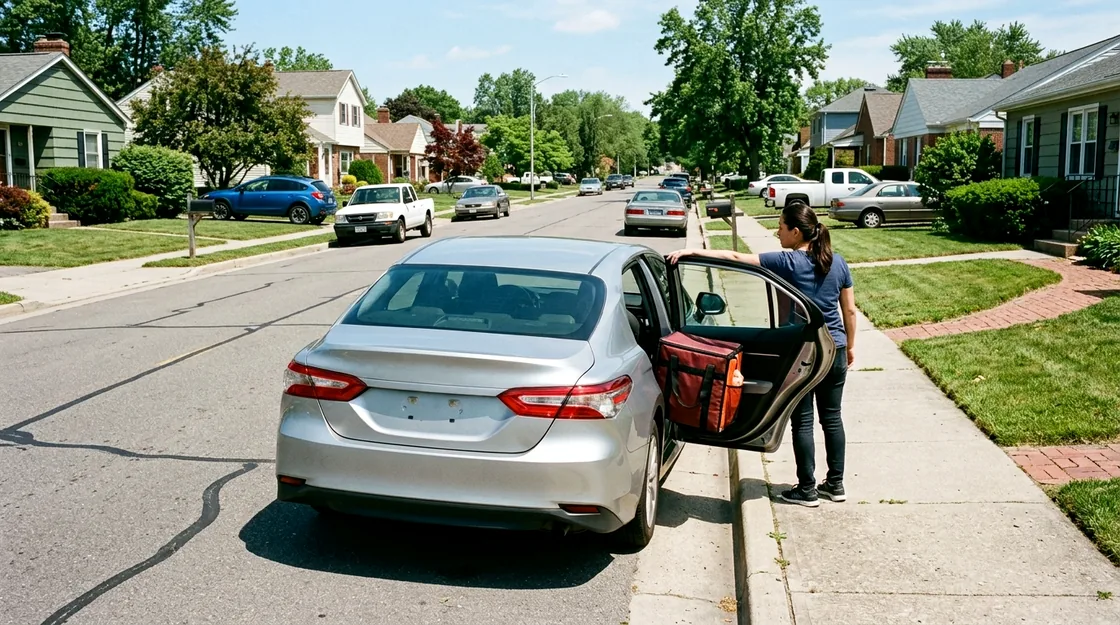
If you drive for a living, one number decides most of your tax bill, and in 2026 it is not one number. It is two.
On July 1 the business standard mileage rate went from 72.5¢ a mile to 76¢. Mid-year changes are rare — the last was 2022 — so almost every page about driver taxes in 2026 was written in January, shows 72.5¢, and is wrong for the second half of the year. If you drive enough to be reading this, that gap is worth real money.
Two rates, one tax year
The split is by when the mile was driven, not by when you were paid for it. A mile on June 30 is worth 72.5¢. The same mile on July 1 is worth 76¢. So the year needs adding up twice.
Take a driver with 24,000 business miles — 11,000 before July and 13,000 after:
- 11,000 × 72.5¢ = $7,975
- 13,000 × 76¢ = $9,880
- Total deduction: $17,855
Run the whole 24,000 at 72.5¢ and you get $17,400, which is $455 short. Run it all at 76¢ and you get $18,240, which overstates the deduction by $385. Neither is a rounding error and one of them is a deduction you are entitled to and did not take.
The practical consequence is that your mileage record needs a date against each entry, not just a total. A single annual figure cannot be split after the fact, and July 1 is the line.
The choice you only get to make once
There are two ways to deduct a car. The standard mileage rate multiplies your business miles by the rate above. The actual expense method adds up what the car really costs — gas, oil, repairs, tires, insurance, registration, depreciation or lease payments — and deducts the business percentage of it.
Most advice tells you to work out both and take the bigger one. That is good advice exactly once, because for a car you own, you must choose the standard mileage rate in the first year that car is available for use in your business. If you use actual expenses in year one, the standard rate is closed to you for that car permanently. Go the other way — standard first — and you keep the option to switch to actual expenses in any later year.
That asymmetry is the whole game, and it is why “compare both and pick the bigger” is incomplete advice. In year one you are not choosing this year’s deduction. You are choosing whether you will ever have a choice again.
Leases work differently and more strictly: if you choose the standard mileage rate for a leased car, you must use it for the entire lease period, renewals included.
A few things also disqualify the standard rate outright. You cannot use it if you operate five or more cars at once, or if you claimed a Section 179 deduction on the car, or the special depreciation allowance, or depreciated it by any method other than straight-line, or used MACRS. Drivers who bought a vehicle and took a large first-year write-off on it have usually made this decision without knowing they made it.
What the rate already contains
The standard rate is not a mileage bonus paid on top of your operating costs. It is your operating costs, averaged. Gas, oil, repairs, tires, insurance and depreciation are inside that 76¢. Deducting the rate and then also deducting fuel is counting the same expense twice, and it is the most common way a driver’s return goes wrong.

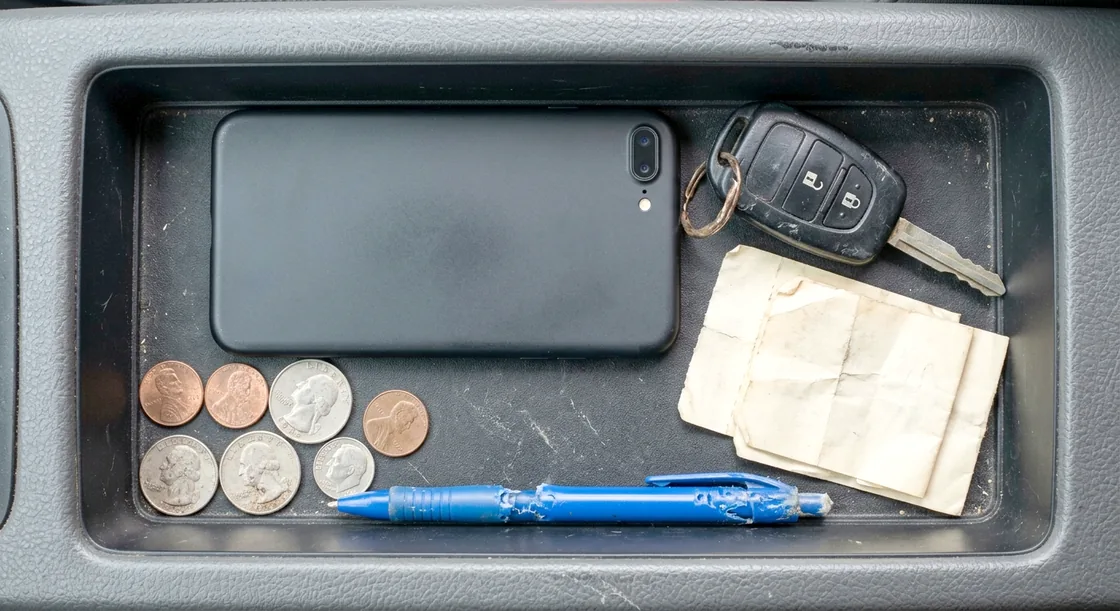
Two things sit outside it and stay deductible either way: parking fees and tolls attributable to business use. Whether you use the standard rate or actual expenses, those are separate. For anyone working a dense city that is not a rounding error either, and it is the reason the receipts in the console tray are worth keeping.
Your 1099-K will not match your bank
Form 1099-K reports gross payment amounts — before the platform’s commission, before service fees, before refunds and chargebacks. Your deposits were net of all of that. So the form will show a larger number than the money that reached you, and that difference is not an error to dispute.
You report the gross figure as income and deduct the platform’s fees separately as a business expense. Which means the platform’s fee statement matters as much as the form itself: without it you are reporting the gross and deducting nothing against it.
The form may not arrive at all
For payment apps and online marketplaces, a 1099-K is required when payments for goods or services exceed $20,000 and the number of transactions exceeds 200. Both conditions, not either. That threshold was restored retroactively, so a great many drivers who expected a form will not get one.
A separate threshold applies to non-card payments reported on Form 1099-NEC, which rose to $2,000 for payments made in 2026.
None of which changes what you owe. A 1099-K is a report a processor files about money it passed to you; it is not the thing that makes the income taxable. No form arriving means no form arriving, and every dollar remains reportable. Drivers below the threshold are in exactly the position of drivers above it, minus the paperwork.
What a record actually has to be
The law requires you to substantiate the expense with adequate records or sufficient evidence supporting your own statement. For mileage that means contemporaneous and dated — written down as you go, not reconstructed in April from memory.
Your platform’s annual summary is a useful starting point and it is not the same thing as your log. It is a report of what the app observed, produced by a company with no obligation to your return, and different platforms count on different bases. If you drive for two apps, the summaries do not add up into one substantiated total.
Here the honest answer runs out. Whether every minute with an app switched on and waiting counts as a business mile is genuinely contested, it turns on the specific facts of how you work, and anyone giving you a confident one-line rule on the internet is giving you something you cannot rely on if it is questioned. Keep the dated log, keep the parking and toll receipts, keep the fee statements, and take the app-on-and-waiting question to someone who will put their name on the answer.
Where this stops
Everything above is federal and general. Your state may treat vehicle expenses differently, and modeling standard against actual for a specific car in a specific first year is exactly the kind of arithmetic worth paying a professional to do once — because, as above, in year one you may be deciding it for every year after.
Questions, answered
What is the 2026 mileage rate for rideshare and delivery drivers?
There are two. The business standard mileage rate is 72.5 cents per mile for miles driven from January 1 to June 30, 2026, and 76 cents per mile from July 1 to December 31, 2026. The split is by when the mile was driven rather than when you were paid, so a 2026 log needs dates against entries and the year has to be totaled twice.
Can I switch from actual expenses to the standard mileage rate?
For a car you own, no. You must choose the standard mileage rate in the first year the car is available for use in your business; if you claimed actual expenses that first year, the standard rate is closed to you for that car. The reverse direction is allowed — if you used the standard rate in year one you may switch to actual expenses in a later year. For a leased car, choosing the standard rate commits you to it for the entire lease period including renewals.
Are parking and tolls deductible on top of the mileage rate?
Yes. Parking fees and tolls attributable to business use are separately deductible whether you use the standard mileage rate or the actual expense method. They are the exception: gas, oil, repairs, tires, insurance and depreciation are already inside the standard rate and deducting them separately counts the same expense twice.
Why is the amount on my 1099-K higher than what the app paid me?
Form 1099-K reports gross payment amounts, before the platform’s commission, service fees, refunds and chargebacks. Your deposits were net of all of it, so the form is expected to be larger and it is not an error to dispute. You report the gross figure as income and deduct the fees separately as a business expense, which is why the platform’s fee statement matters as much as the form.
Will I get a 1099-K if I earned less than $20,000 driving?
Probably not from the app. For payment apps and online marketplaces a 1099-K is required only when payments exceed $20,000 and the number of transactions exceeds 200 — both conditions, not either. A separate $2,000 threshold applies to non-card payments reported on Form 1099-NEC for 2026. Receiving no form changes nothing about what you owe: the income is reportable either way.
Do the miles count while the app is on but I have no passenger?
This one does not have a reliable one-line answer, and treat anyone who gives you one carefully. It turns on the specific facts of how you work, and your platform’s annual mileage summary is a report of what the app observed rather than a substantiated log — different platforms count on different bases, and two summaries do not add into one record. Keep a dated contemporaneous log, keep parking and toll receipts, and take this question to a tax professional who will stand behind the answer.
Sources
- Standard mileage rates — IRS. The current table, showing both 2026 periods: 72.5 cents for January 1 to June 30 and 76 cents from July 1.
- Internal Revenue Bulletin 2026-29 — IRS. The announcement of the mid-year increase to 76 cents effective July 1, 2026.
- Topic no. 510, Business use of car — IRS. The first-year election for a car you own, the entire-lease rule, the disqualifiers including Section 179 and MACRS, and the confirmation that parking and tolls are separately deductible under either method.
- Publication 463, Travel, Gift, and Car Expenses (chapter 5, Recordkeeping) — IRS. The substantiation requirement that makes a dated contemporaneous log the thing being asked for.
- Understanding your Form 1099-K — IRS. That the form reports gross payments before fees and adjustments, which is why it exceeds what the platform deposited.
- IRS issues FAQs on the Form 1099-K threshold; dollar limit reverts to $20,000 — IRS. The restored $20,000 and 200-transaction threshold, and that both conditions must be exceeded.