


Yes, you can write off a new iPhone Duo or the touchscreen MacBook Pro if you’re self-employed and use it for your business, for the share of its use that is for work. The iPhone Duo starts at $1,999, under the $2,500 de minimis limit, so the business share can usually be deducted in full in 2026. The MacBook Pro with PROLED XDR Display starts at $2,899, so it is deducted with bonus depreciation or Section 179 instead, which also lets you take the business share in the first year. Either has to be bought and in use by December 31 to count for 2026.
Who can write them off
Freelancers, content creators, contractors and anyone else filing a Schedule C can deduct equipment the business uses. If your only income is a W-2 job, a phone or laptop you buy for it isn’t deductible on your federal return; ask your employer to provide it or reimburse you.

The business share
A device used only for the business is fully deductible. One you also use personally is deductible for its business share: use the iPhone 70% for work and 70% of its cost counts. Base the share on something you can explain, such as hours of use, and write down how you got it. Accessories, a case, AppleCare and business apps follow the same rule.
The iPhone Duo: under $2,500
At $1,999 for the 256GB model, the iPhone Duo is under the $2,500 de minimis safe harbor, which lets a small business deduct an item costing $2,500 or less in the year it is bought rather than depreciating it. You claim it with an election statement attached to your return. Larger storage models up to $2,500 qualify the same way; the 1TB and 2TB models are over it and work like the MacBook below.
Buying on a monthly installment plan doesn’t change this: the phone is bought when you take it, and its price is what you deduct, not the monthly payments. Your phone bill is a separate deduction, covered in deducting your phone bill and internet.
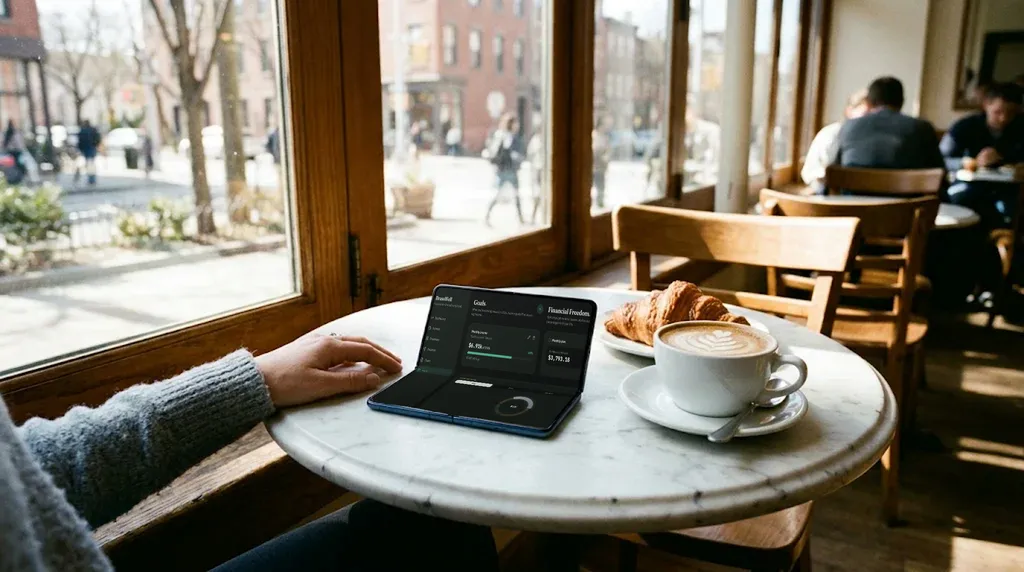
The MacBook Pro: over $2,500
The 14-inch MacBook Pro with PROLED XDR Display starts at $2,899 and the 16-inch at $3,399, both above the de minimis limit. Two rules still let you deduct the business share in 2026:
- Bonus depreciation is 100% for property placed in service in 2026.
- Section 179 expensing does the same, as long as the business use is more than 50%.
Without either, a computer is depreciated over five years. If business use later drops to 50% or less after Section 179, part of the deduction comes back as income.

For content creators
For a creator, the phone is often the main camera and the laptop the editing suite, and both count as equipment. The share that matters is the share used to make, edit and publish content and run the business. Scrolling for fun on the same device is personal. A device a brand sent you in exchange for content is income at its value first, and then deductible equipment; see content creator tax write-offs.
What it actually saves
| iPhone Duo 256GB | MacBook Pro 14-inch | |
|---|---|---|
| Price | $1,999 | $2,899 |
| Business use | 70% | 90% |
| 2026 deduction | $1,399 | $2,609 |
| Federal tax saved, single, $80,000 profit | about $320 | about $600 |
A deduction lowers both income tax and self-employment tax on the business share, and at incomes like these returns roughly a quarter of it, not the price. Buy the device the business needs; don’t buy one for the write-off.
Buying before December 31
To count for 2026, the device has to be bought and in use for the business by December 31, not just ordered. A Black Friday purchase that arrives in time counts; one delivered in January is a 2027 deduction. The rest of the list is in the year-end tax planning checklist.
Questions, answered
Can I write off an iPhone Duo for my business?
If you’re self-employed, yes, for the share you use it for the business. At $1,999 for the 256GB model it is under the $2,500 de minimis safe harbor, so the business share can usually be deducted in full in the year you buy it.
Can I write off the new touchscreen MacBook Pro?
Yes, for its business share, if you’re self-employed. It starts at $2,899, above the $2,500 de minimis limit, so you deduct it with bonus depreciation, 100% for 2026, or Section 179 if business use is more than 50%. Either lets you take the business share in the first year.
Can content creators write off a phone they film on?
Yes. A phone used to shoot, edit and publish content is business equipment, deductible for the share of its use that is for the business. Personal use of the same phone isn’t.
Can I deduct a phone I bought on a monthly payment plan?
Yes. The phone counts as bought when you take it, so you deduct its price for the business share in that year, not the monthly payments as they come.
Do I have to buy it before December 31?
To deduct it on your 2026 return, it has to be bought and in use for the business by December 31, 2026. A device delivered in January is a 2027 deduction.
Sources
- Apple unveils iPhone Duo — Apple. The $1,999 starting price.
- Apple unveils MacBook Pro with PROLED XDR Display — Apple. Touch on a Mac; $2,899 for 14-inch and $3,399 for 16-inch.
- Tangible property regulations — IRS. The $2,500 de minimis safe harbor and its election.
- Publication 946, How to Depreciate Property — IRS. Bonus depreciation, Section 179 and its more-than-50% business-use rule.