
If you cut hair for a living, two things changed in 2025 and only one of them has been explained to you properly.
There is now a federal deduction for tips — up to $25,000 a year, for tax years 2025 through 2028 — and the IRS list of occupations that qualify names your job outright. Treasury Tipped Occupation Code 603 is “Barbers, Hairdressers, Hairstylists, and Cosmetologists”. You are not in the gray area of that list. You are on it by name.
The part almost nobody mentions is the disqualifier, and it is one page away from where the deduction is announced.
The deduction, and its actual limits
Qualified tips are voluntary cash or charged tips from customers, including tips received through tip sharing. The rules that bound it:
- Maximum $25,000 a year.
- If you are self-employed, the deduction cannot exceed your net income from the business the tips were earned in, figured without regard to this deduction. A chair that barely broke even caps the deduction at whatever it actually made.
- It phases out above $150,000 of modified adjusted gross income, or $300,000 filing jointly.
- You need a valid Social Security number, and if you are married you must file jointly to take it.
- It is available whether or not you itemize, which makes it unusually widely useful.
The trap: specified service trades
Here is the sentence that the short explainers leave out. Self-employed individuals in a Specified Service Trade or Business — an SSTB, the same definition used for the section 199A deduction — are not eligible. Neither are employees whose employer is one.
That exclusion removes a lot of self-employed people from a deduction they have read they qualify for, because SSTB covers things like health, law, accounting, consulting, athletics and financial services. Cosmetology and barbering are not in that category, which is the reason this guide can tell you the deduction is available to you and mean it.
It is also the reason to be suspicious of any page that tells a different tipped trade the same thing without checking. Being on the tipped-occupation list and being outside the SSTB definition are two separate tests, and a page that only ran the first one has done half the work. We wrote the personal trainers guide around exactly this problem: fitness training is on the list too, and it sits next to two SSTB categories, health and athletics. The section 199A rules keep physical exercise out of the first and limit the second to athletic competition, but with the tips regulation’s own SSTB subsection still reserved, a trainer’s answer is not quite as clean as yours.
One update worth knowing, because it moved after this deduction was first explained everywhere. The final regulations — published April 13, 2026 and effective June 12, 2026 — settled the occupation list and the definition of a qualified tip, but they did not settle the SSTB exclusion: the subsection reserved for it, § 1.224-1(g), is still empty. Notice 2025-69 had already provided transition relief in the meantime, treating anyone in a listed occupation as not having received tips in an SSTB, for non-employees as well as employees. None of that changes your answer — cosmetology is outside the SSTB categories either way, which is the whole point of this section. It matters if you read about this deduction somewhere that treated the exclusion as fully defined. It is not, yet.

What the deduction is not
It is not permission to leave tips off your books, and reading it that way is how this becomes a problem rather than a tax break.
Tips are income. For a booth renter they are business income, part of your gross receipts on Schedule C, exactly like the money for the haircut itself. The deduction is a separate line taken on your return afterwards. You report the tips, then you deduct what qualifies. Netting them out of your receipts and calling it the new deduction produces a return that says something different from what the law allows.
This guide also does not tell you the deduction lowers your self-employment tax, because that is a different calculation from your income tax and not one this deduction is described as touching. If that distinction matters to your numbers — and on a $25,000 deduction it might — that is a question for a professional, not for a website.
Booth rent, commission, and what you actually are
Most of the tax difference in this trade comes from one fact: whether you rent a chair or work on commission.
A booth renter is running a business. The rent is a business expense, the tips and service income are business income, nobody withholds anything, and the quarterly estimated payments are yours to make. A commission stylist may be an employee, in which case withholding happens and the tax picture is a different shape entirely.
For a booth renter, the useful number is what the chair leaves you each week once rent, supplies and tax come out. Our free booth rent take-home calculator works that out with the 2026 rates.
The thing worth knowing is that this is decided by the facts of the working relationship, not by what the paperwork calls you. A salon cannot make someone a contractor by writing “independent contractor” on an agreement while controlling their hours, their prices, their products and their client list. If your situation looks like employment in substance, the label on the contract is not the last word — and the IRS publishes an industry guide for exactly this trade, linked below, because the question comes up so often here.
What a booth renter deducts
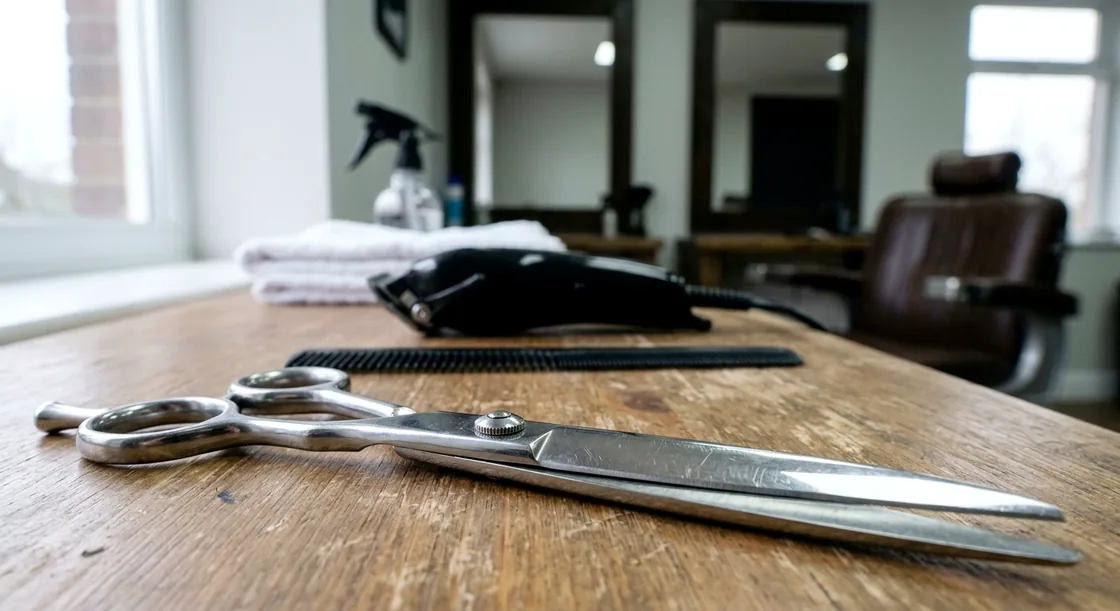
The ordinary and necessary costs of the chair: the booth rent itself, color and product you buy for use on clients, shears, clippers, dryers and their repair, laundry of salon towels, your professional license renewal, liability insurance, booking software, and the card-processing fees on your own payments.
Retail product you resell is inventory rather than a simple expense, and the sales tax on it is a state question that varies enough that anyone who tells you the rule without asking where you work is guessing.
Mileage between two salons on the same day is business travel. The drive from home to the chair you work at every day is commuting, which is not deductible — and 2026 needs two mileage calculations anyway, because the rate changed on July 1.
Where this stops
Two things here genuinely need a professional rather than a guide. Whether your particular arrangement is employment or self-employment turns on the facts of how you work, and getting it wrong is expensive in both directions. And SSTB status, while clear enough for a straightforward barbering or hair business, is a definition with edges — if you also coach, consult, teach or sell something adjacent, the answer stops being obvious.
Questions, answered
Do hairstylists and barbers qualify for the new no-tax-on-tips deduction?
The occupation qualifies. The IRS list of occupations that customarily and regularly received tips on or before December 31, 2024 includes Treasury Tipped Occupation Code 603, “Barbers, Hairdressers, Hairstylists, and Cosmetologists”. Qualifying as an occupation is only one of the tests, though: self-employed individuals in a Specified Service Trade or Business under section 199A are excluded, and the deduction phases out above $150,000 of modified adjusted gross income.
How much are tips deductible for in 2026?
The maximum annual deduction is $25,000, and the provision is effective for tax years 2025 through 2028. If you are self-employed, the deduction cannot exceed your net income from the trade or business in which the tips were earned, calculated without regard to this deduction. It phases out above $150,000 of modified adjusted gross income, or $300,000 for joint filers, and if you are married you must file jointly to claim it.
Does the tips deduction mean I do not have to report my tips?
No, and treating it that way is the mistake to avoid. Qualified tips are voluntary cash or charged tips from customers including shared tips, and they are income. For a booth renter they belong in gross receipts on Schedule C alongside service income. The deduction is claimed separately on the return afterwards, and it is available whether you itemize or take the standard deduction.
Is booth rent tax deductible?
Yes. If you rent a chair or a booth you are operating your own business, and the rent is an ordinary business expense deducted on Schedule C along with product you use on clients, tools and their repair, towel laundry, license renewal, liability insurance, booking software and your own card-processing fees.
Am I an employee or an independent contractor at a salon?
It depends on the facts of the working relationship rather than on what the agreement calls you. A salon that sets your hours, your prices, the products you use and who your clients are looks like an employer in substance, whatever the paperwork says, and a written “independent contractor” label does not settle it. The IRS publishes a guide specific to the cosmetology and barber industry because the question arises here so often. Getting it wrong is costly in both directions, so it is worth a professional opinion on your particular arrangement.
Can I deduct mileage from home to the salon?
No. The daily drive between home and the place you regularly work is commuting, which is not deductible. Driving between two salons on the same working day is business travel and does count. Note that 2026 needs two separate mileage calculations, because the standard rate changed from 72.5 cents to 76 cents a mile on July 1.
Sources
- Working Families Tax Cuts: tax deductions for working Americans and seniors (FS-2025-03) — IRS. The full rules in one place: 2025 through 2028, the $25,000 cap, the self-employed net-income limit, the phase-out, and the SSTB exclusion that the shorter pages omit.
- What the “No Tax on Tips” deduction means for you — IRS. The plain-language summary, including that the deduction is available whether or not you itemize and the joint-filing and Social Security number requirements.
- Occupations that customarily and regularly received tips on or before Dec. 31, 2024 — IRS. Treasury Tipped Occupation Code 603, naming barbers, hairdressers, hairstylists and cosmetologists.
- Occupations That Customarily and Regularly Received Tips; Definition of Qualified Tips (final regulations) — Federal Register. The final list, published April 13, 2026 and effective June 12, 2026, which keeps code 603 for this trade — and which leaves the SSTB exclusion reserved at § 1.224-1(g) rather than defining it.
- Notice 2025-69 — IRS. The transition relief on the SSTB requirement and its extension to non-employees.
- Publication 4902, Tax Tips for the Cosmetology and Barber Industry — IRS. The IRS’s own guide for this trade, which exists because the employee-versus-contractor question comes up here more than almost anywhere.
- Standard mileage rates — IRS. Both 2026 periods, for the salon-to-salon mileage note: 72.5 cents to June 30 and 76 cents from July 1.